Portrait of Shidu Ryan Ren

Agentic Robotics · Latent World Models · Multimodal Agents

Shidu (Ryan) Ren

Hi! I am an undergraduate student in the Department of Electrical and Computer Engineering at the University of Toronto. I am currently a Research Intern at IIIS, Tsinghua University, working with Yunze Liu, and a Research Intern at UW–Madison, working with Prof. Xiao Luo. I am also a Software Engineer Intern at Microchip Technology. Previously, I was a Research Intern at Memories.ai and a Machine Learning Intern at Themis AI.

My research focuses on agentic robotics, latent world models, and multimodal agents. I am interested in building AI systems that learn predictive representations of the world and integrate multimodal reasoning with planning and action in complex environments.

Seeking Fall 2028 CS PhD opportunities.

Shidu Ryan Ren in Toronto
Shidu Ryan Ren at an outdoor event
  1. Joined Mila – Quebec AI Institute as a Research Intern.

  2. One paper (ICM-Bench) has been accepted to NeurIPS 2026 - LCFM! Link

  3. Joined IIIS, Tsinghua University as a Research Intern.

  4. One paper (NeTron) has been accepted to IEEE VLSI 2026! Link

  5. Joined Microchip Technology Inc. as a Software Engineer Intern.

  6. Joined Memories.ai as a Research Intern.

  7. Joined UW–Madison as a Research Intern, working with Prof. Xiao Luo.

  8. Joined Themis AI as a Machine Learning Intern.

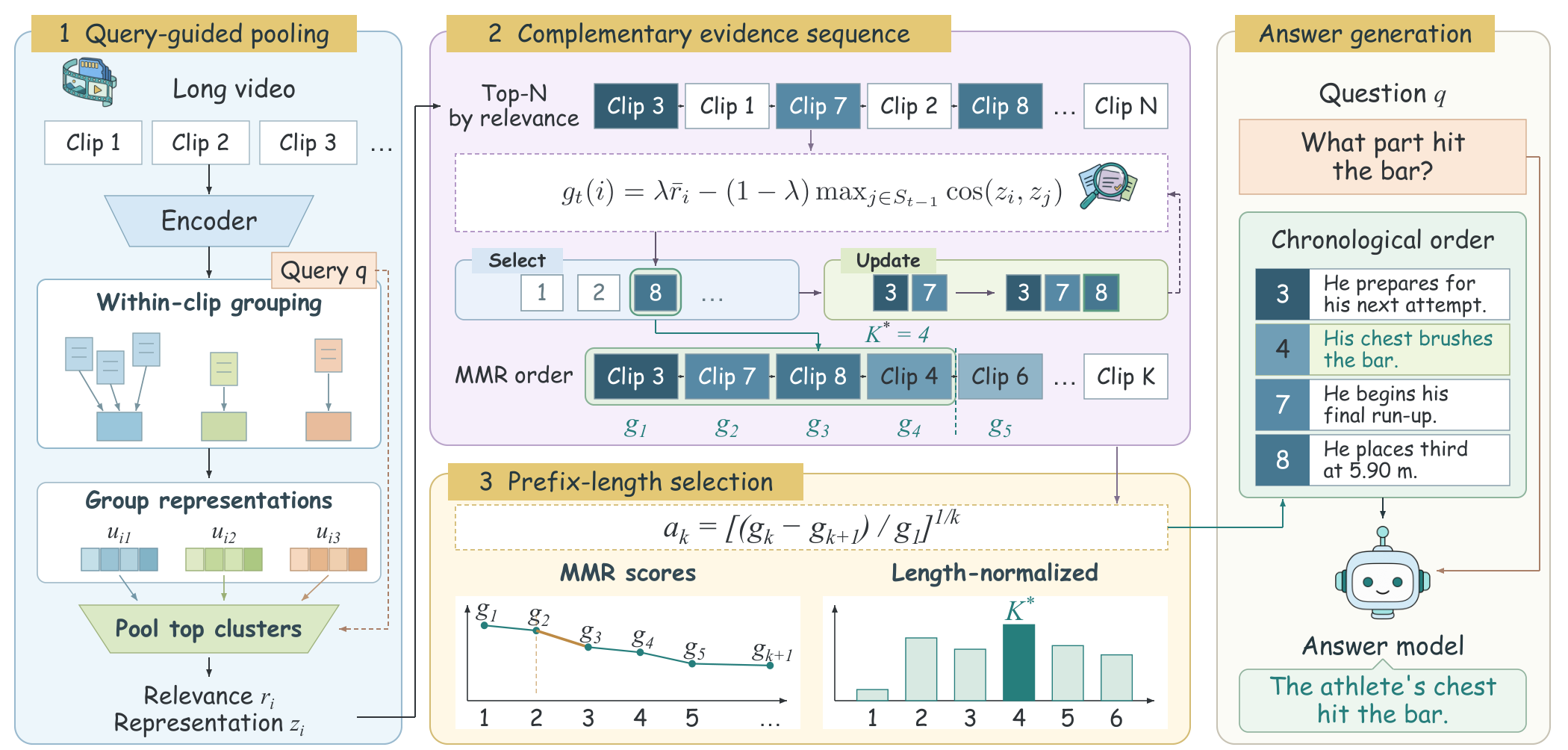
PACE-Mem retrieval pipeline: query-guided pooling, complementary evidence selection, and adaptive prefix-length selection for multimodal agent memory Open full-size figure ↗

PACE-Mem: Prefix-Aware Complementary Evidence for Multimodal Agents.

Shidu Ren, Rong-cheng Tu, Hang Zhou, Xiao Luo

PACE-Mem is a training-free retrieval method for multimodal agents with long-term memory. It selects complementary evidence and adapts retrieval depth from a shared selection trajectory, reducing redundancy while retaining relevant context. Across three long-video benchmarks and two agent frameworks, it improves question answering without changing memory construction or answer generation.
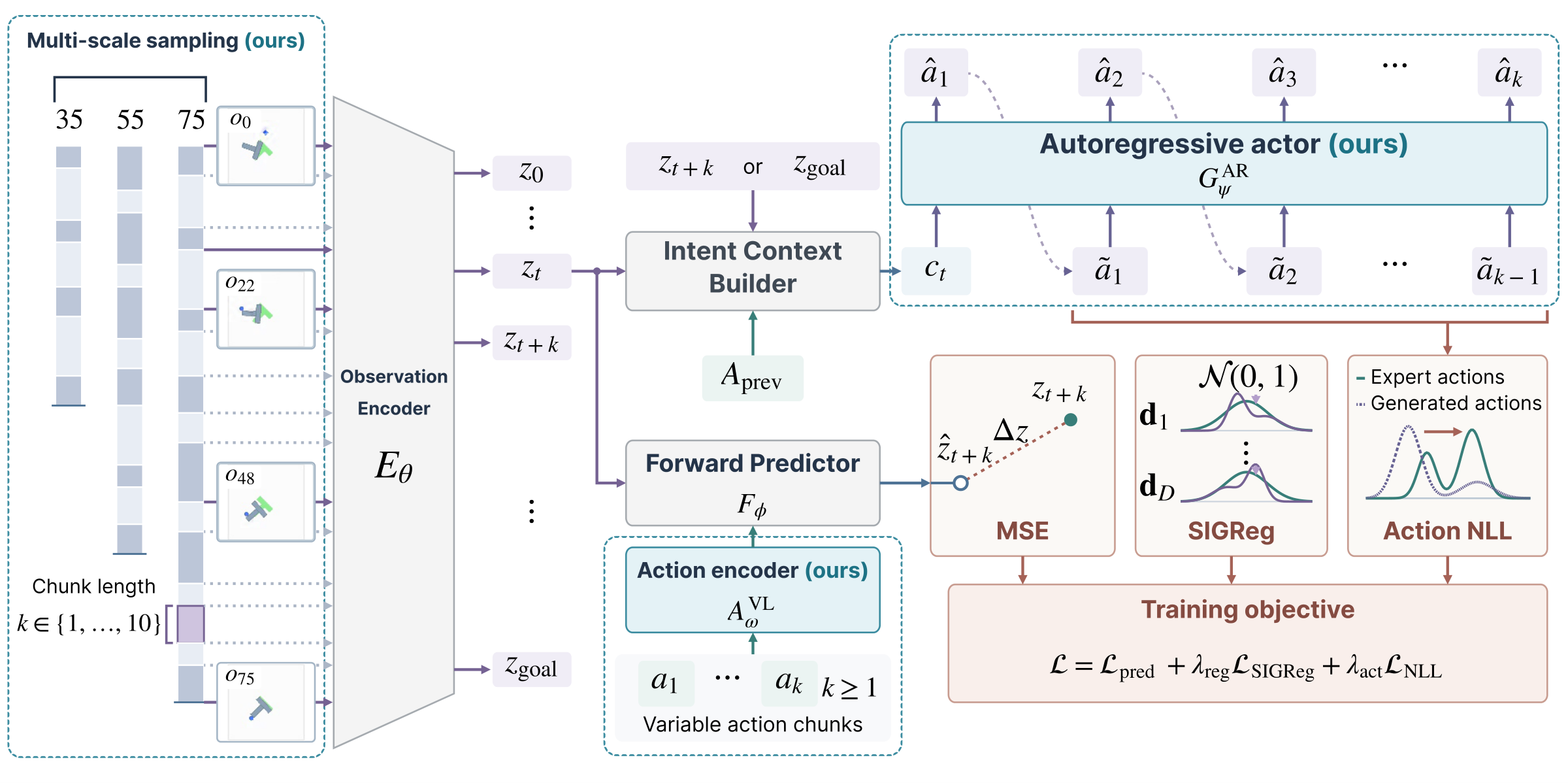
FlexiWorld Figure 2: joint training of the causal action encoder, latent predictor, and goal-conditioned autoregressive actor Open full-size figure ↗

FlexiWorld: Learning and Planning via Flexible Action Chunks Across Multiple Time Scales.

Shidu Ren*, Qilin Gu*, Zhenghao Ni*, Junhan Sun, Jiaqi Wang, Damien Scieur, Yunze Liu
* Equal contribution

FlexiWorld is a JEPA-based world model that jointly learns latent dynamics and goal-conditioned action generation across multiple time scales. Flexible action chunks support different planning granularities without retraining, achieving 89.29% mean success across four control benchmarks and goal distances with actor-residual planning (ARCEM).

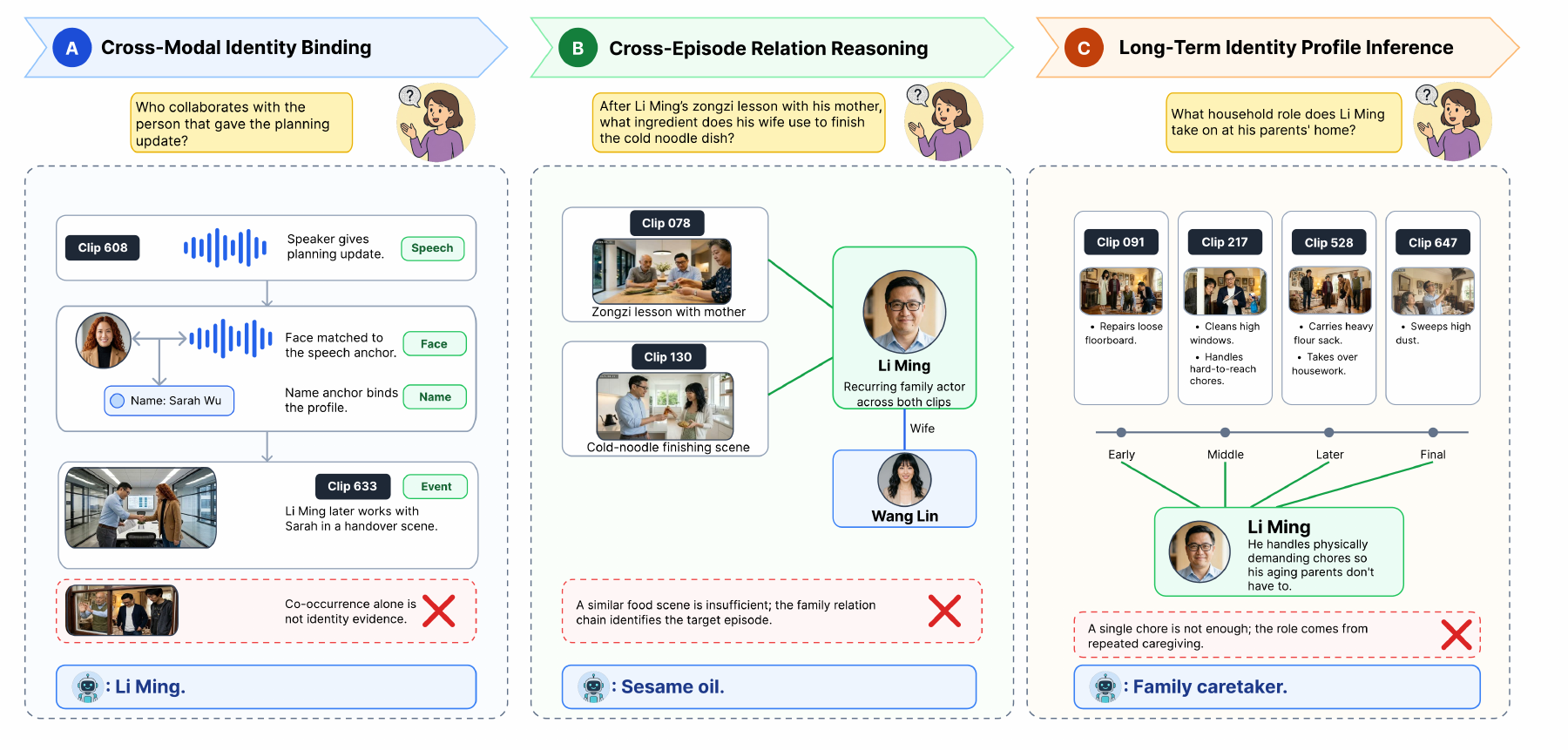
ICM-Bench identity reasoning tasks across long video memories Open full-size figure ↗

NeurIPS 2026 - LCFM

ICM-Bench: Person-Level Identity Reasoning in Multimodal Agents with Long-Term Memory.

Shidu Ren, Yunze Liu, Xing Liu, Chi-Hao Wu, Enmin Zhou, Junxiao Shen

ICM-Bench evaluates whether multimodal agents can remember recurring people and reason about their identities and relationships across long video memories. It contains 839 synthetic clips spanning 141 minutes and 1,217 open-ended questions across three identity-centric memory tasks.

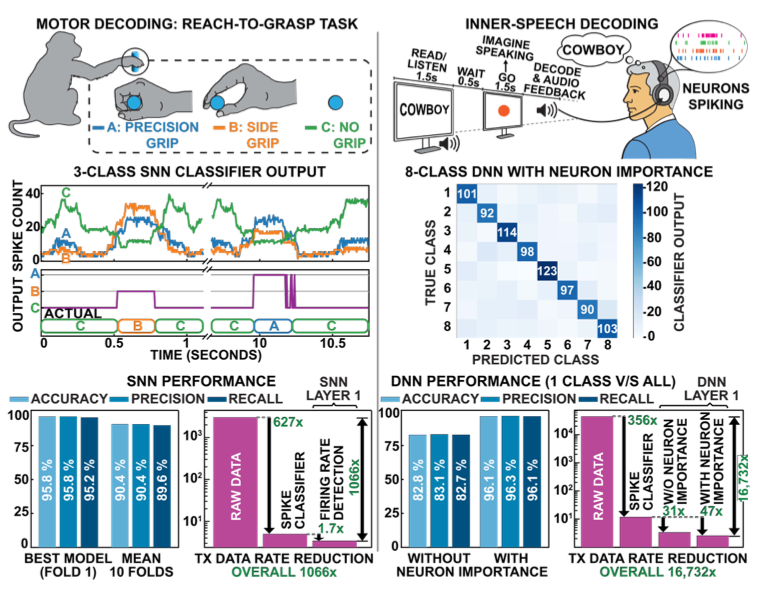
Figure 5 split-inference performance validation in motor and inner-speech decoding Open full-size figure ↗

IEEE VLSI 2026

A Split-Inference Intracortical Interface IC for Battery-Free mm-Scale Magnetoelectrically Powered Brain Implants.

Mustafa Kanchwala*, Jianxiong Xu*, Mohammad Abdolrazzaghi*, Wonjune Kim, Gerard O'Leary, Yu Huang, Junyu Ma, Jose Sales Filho, Sudip Nag, Hanfeng Cai, Qiaosong Deng, Weian Deng, Anush Mutyala, Theeban Kumaresan, Shidu Ren, Chae Lim, Mandana Movahed, Homeira Moradi, George Eleftheriades, Taufik A. Valiante, Jacob T. Robinson, Roman Genov

We present a split-inference intracortical interface IC for battery-free, millimeter-scale brain implants, with validation across motor reach-to-grasp and inner-speech decoding. The work connects low-power neural decoding, spike-sorting pipelines, and system-level evaluation, showing neural output data-rate reductions of 1,066× and 16,732× while preserving decoding performance.

Research and engineering experience.

May 2026 - Present

Software Engineer Intern · Microchip Technology Inc.

Working on research-driven FPGA EDA tools for PolarFire 2, combining timing and power analysis with AI and LLM-assisted approaches for interconnect timing modeling and design automation.

Oct 2026 - Present

Research Intern · Mila – Quebec AI Institute

Researching JEPA-based latent world models for predictive representation learning and long-horizon planning.

Jun 2026 - Present

Research Intern · IIIS, Tsinghua University

Developing LLM-based robot policies that integrate JEPA world models and in-context adaptation for efficient embodied decision-making.

Jan 2026 - May 2026

Research Intern · Memories.ai

Researched LLM post-training, long-video understanding, and memory-augmented models for persistent visual intelligence.

Dec 2025 - Present

Research Intern · UW–Madison

Focused on LLM post-training and agent applications under the supervision of Professor Xiao Luo.

May 2025 - Sep 2025

Research Intern · University of Toronto

Contributed to VLSI 2026 work and developed low-power neural decoding and spike-sorting pipelines for neural interface systems.

May 2025 - Sep 2025

Machine Learning Intern · Themis AI

Built an active-learning data labeling framework using uncertainty sampling, clustering-driven selection, and adaptive relabeling.

2023 - 2028 · Five-year program with one year of co-op

University of Toronto

Electrical & Computer Engineering (ECE)

Bachelor of Applied Science (BASc) cGPA 3.83

Reviewer

  1. WACV 2027
  2. LCFM Workshop @ NeurIPS 2026

Open to Fall 2028 PhD opportunities in AI and Computer Science.

I am broadly interested in Artificial Intelligence and its applications. I am currently open to Fall 2028 PhD opportunities in AI and related areas. I am always happy to connect with researchers, students, and practitioners with shared interests — feel free to reach out.